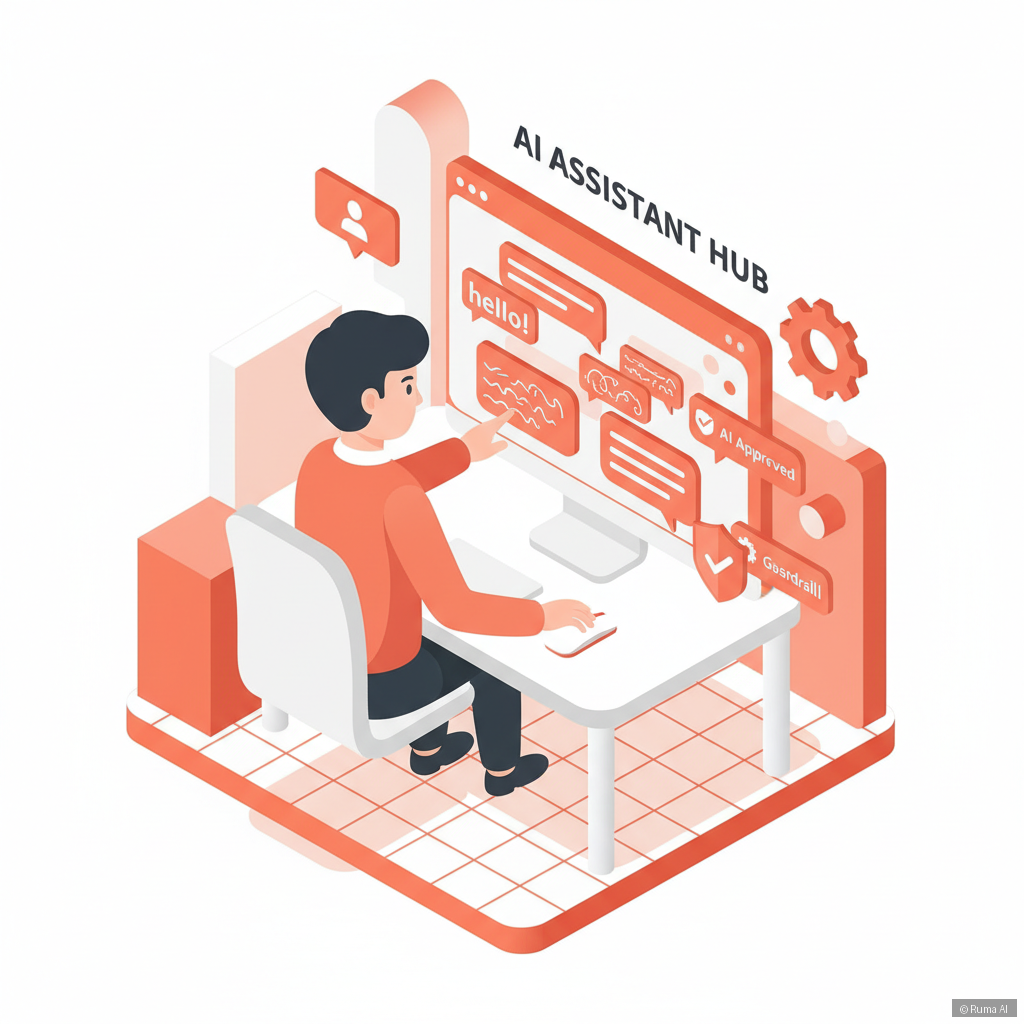
When Big AI Decisions Send Small Business Signals
Imagine you run a mid-sized Shopify store selling skincare products. You've just deployed an AI chatbot, and a week in, a customer asks it something wildly off-topic — something your chatbot absolutely should not be answering. It stumbles, improvises, and suddenly you've got a screenshot circulating on Reddit.
This isn't a hypothetical. It's the kind of scenario that plays out when businesses deploy AI without thinking carefully about boundaries, context, and guardrails.
Recently, a major AI lab made headlines by indefinitely pausing a controversial product rollout after concerns about safety, brand risk, and regulatory pressure mounted. Without rehashing the specifics, the core lesson is universal: even the most powerful AI companies in the world have to stop and ask, "Should we?" before they ask, "Can we?"
For small and medium businesses adopting AI customer support tools in 2026, that question is just as important — and the answers have real consequences for your brand, your customers, and your bottom line.

What "Responsible AI" Actually Means for Your Store
The phrase "responsible AI" gets thrown around a lot. In boardrooms and policy papers, it sounds abstract. But if you're running a WooCommerce store or a Shopify shop, responsible AI is actually pretty concrete.
It means your AI agent:
- Stays on topic — it answers questions about your products, orders, and policies, not random tangents
- Knows when to hand off — it recognizes when a conversation needs a human and transfers gracefully
- Doesn't make things up — it pulls real data from your product catalog and order system, not hallucinated guesses
- Protects customer data — it handles OTP verification and personal details with care
- Reflects your brand voice — it doesn't go rogue with tone or messaging
This is exactly the philosophy baked into how agentic AI platforms like Ruma AI are built. The AI doesn't just freestyle — it operates within a defined toolkit of 13 purposeful tools, from product search and order tracking to coupon application and human handoff. Every action is intentional and bounded.
The Real Risk Isn't AI Being Too Smart — It's AI Being Unsupervised
Here's the thing most people get wrong about AI risk in a business context. The danger isn't that your customer support AI becomes sentient and starts plotting. The danger is much more mundane: an unsupervised AI saying the wrong thing to the wrong customer at the wrong moment.
That could mean:
- Promising a discount it wasn't authorized to give
- Sharing order details with the wrong account holder
- Answering a sensitive complaint in a tone that escalates instead of de-escalates
- Getting manipulated by a customer into bypassing your return policy
The industry news about major AI labs pausing certain deployments is a reminder that guardrails aren't a limitation — they're a feature. The best AI systems are the ones that know their lane and stay in it.
For e-commerce automation specifically, this matters enormously. Your AI is touching real transactions, real customer relationships, and real revenue. You want it powerful and disciplined.
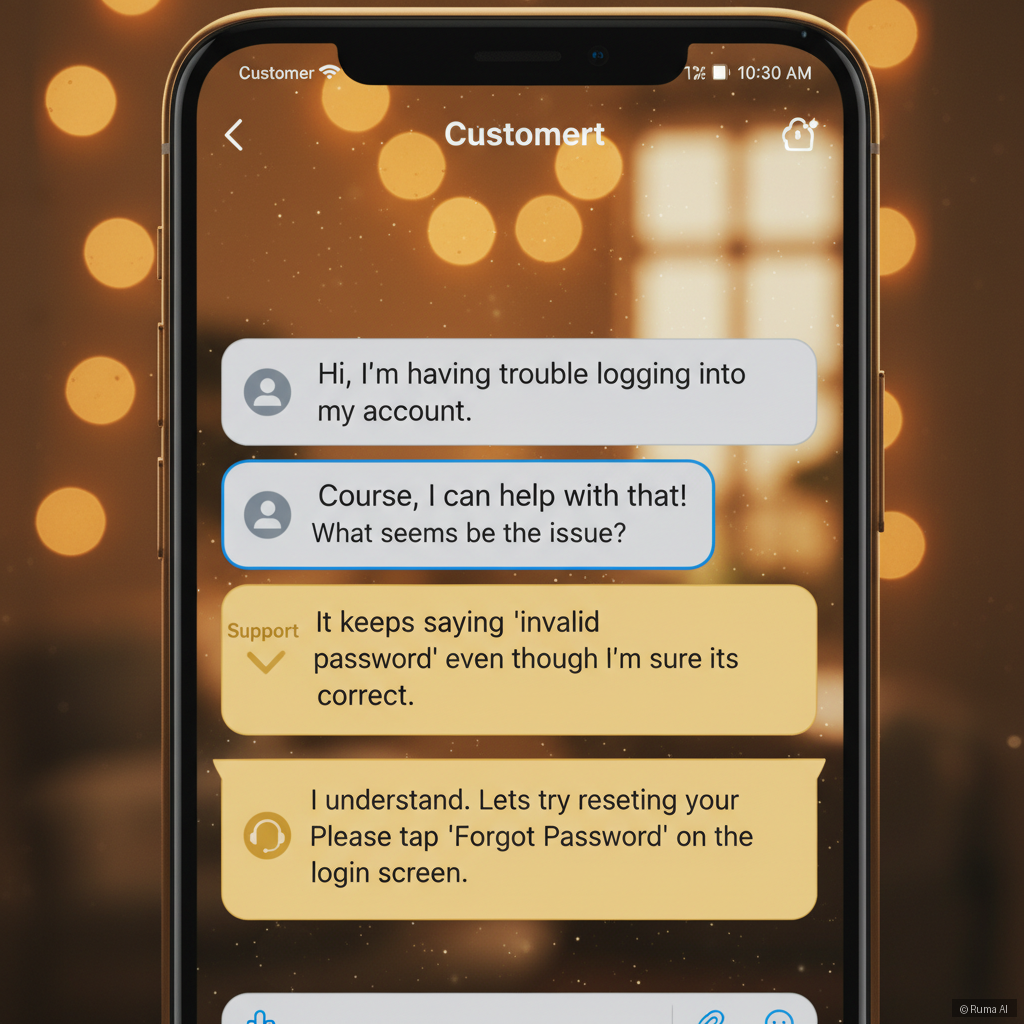
How to Set Up AI Support the Right Way: A Practical Framework
So what does responsible, effective AI customer support actually look like in practice? Here's a framework that works for SMBs across industries.
Step 1: Define the Scope Before You Deploy
Before you install anything, write down what you want your AI to handle. Common use cases for e-commerce:
- Order status inquiries
- Product recommendations and search
- Coupon and discount application
- Returns and refund policy FAQs
- Booking calls with your sales team
- Collecting leads for follow-up
If you're on WordPress with WooCommerce, the WordPress AI Plugin gives you deep integration right out of the box — product sync, order lookup, cart management. Install it in one click and your AI already knows your catalog.
If you're on Shopify, the Shopify AI Agent connects natively to your store data, so the AI is pulling real-time inventory and order information — not guessing.
Step 2: Set Up Human Handoff as a Non-Negotiable
Every responsible AI deployment needs a clear escape valve. Ruma AI's agentic AI includes a live agent transfer tool that hands off conversations via WebSocket — the context carries over, so your human agent doesn't start from scratch.
This is especially important for:
- Angry customers who've escalated
- Complex refund disputes
- Any situation requiring judgment calls
The AI should recognize these moments and hand off without being prompted. That's what separates a well-designed agentic AI from a basic chatbot.
Step 3: Choose the Right Deployment Channel
Not every business needs a website widget. Think about where your customers actually are:
- Website visitors: Use the Embed Script for any website — one line of code, works on React, Next.js, Vue, or any custom-built site
- Telegram or WhatsApp users: The Standalone AI Agent deploys directly to messaging channels — no website required
- Phone-first customers: Ruma AI's voice calling feature means the AI can answer calls with full context, not just chat
Meeting customers where they are is half the battle. Responsible AI also means accessible AI.
Step 4: Connect Your CRM and Review Transcripts
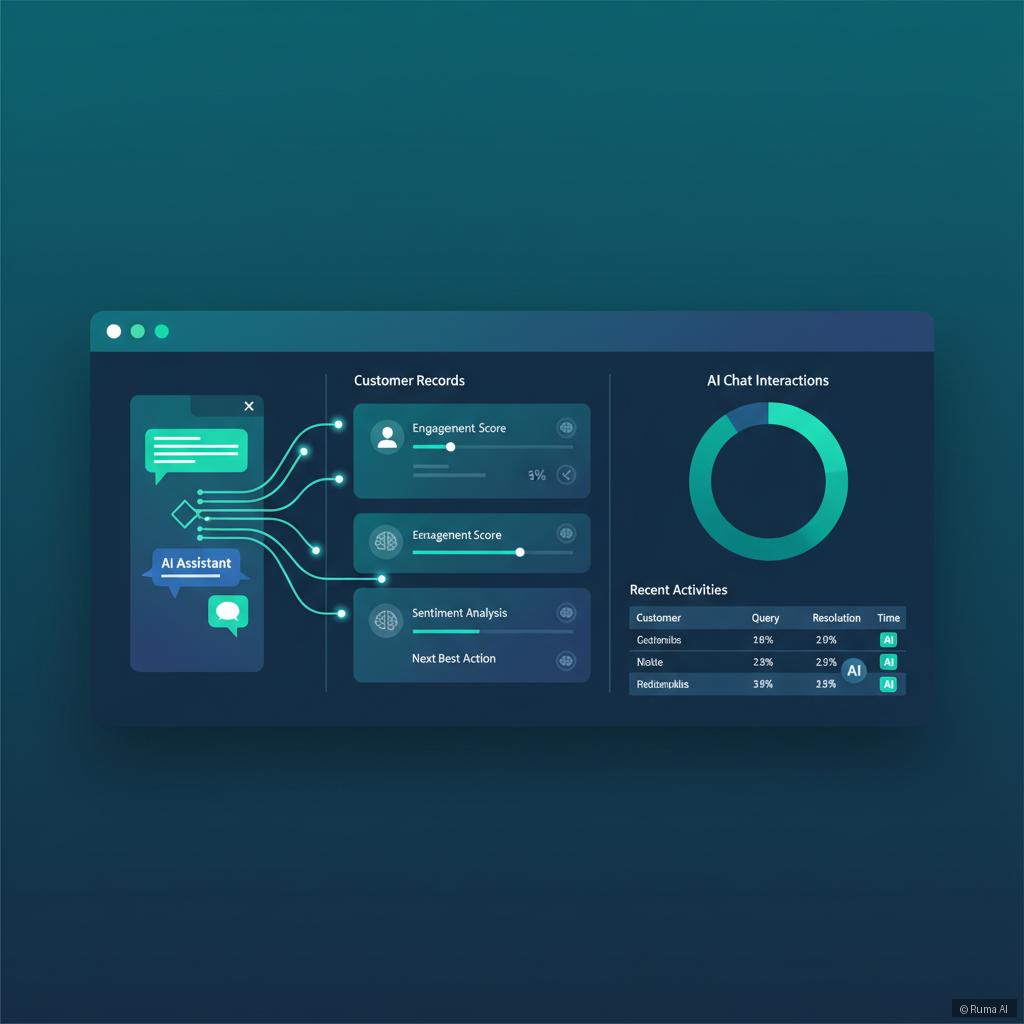
This is where most businesses drop the ball. They deploy AI and never look at what it's actually saying. Ruma AI syncs conversations and leads to HubSpot, Salesforce, or Zoho automatically — which means you have a paper trail.
Review transcripts weekly, especially in the first month. Look for:
- Questions the AI couldn't answer (add those to your FAQ)
- Moments where customers seemed frustrated
- Patterns in what people are asking that you hadn't anticipated
This feedback loop is how you tune your AI to be both more helpful and more bounded over time.
The Competitive Advantage of Getting This Right
Here's the upside that often gets lost in conversations about AI risk: businesses that deploy AI thoughtfully and responsibly end up with a significant competitive advantage.
While others are dealing with chatbot disasters and customer complaints, you're running 24/7 support in 50+ languages, automatically booking meetings, applying coupons at checkout, and pushing qualified leads into your CRM — all without hiring a single additional support rep.
Ruma AI's plans start at just $9/month, with a free tier that gives you 100 messages a month to test the waters. There's no reason to wait, and no reason to rush carelessly either.
The lesson from the big AI labs isn't "AI is dangerous, avoid it." It's "AI is powerful — treat it accordingly."
Done right, AI customer support isn't just automation. It's a competitive moat.
Frequently Asked Questions
What guardrails does Ruma AI have to prevent the AI from going off-script?
Ruma AI's agentic AI operates through a defined set of 13 tools — each one purpose-built for specific customer support tasks like product search, order tracking, or human handoff. The AI autonomously decides which tool to use, but it can only use tools you've enabled. It doesn't freelance outside those boundaries, which keeps your brand protected and your customers safe.
Can I use Ruma AI on my Shopify store without a developer?
Absolutely. The Shopify AI Agent is designed for non-technical store owners. It connects to your Shopify data automatically — products, orders, and checkout — and you can customize the widget's colors, avatar, and tone without writing a line of code.
What happens when the AI doesn't know the answer?
This is where the live agent handoff feature shines. When Ruma AI's agent detects it can't resolve a query — or when a customer explicitly asks for a human — it transfers the conversation to a live agent with full context intact. No repeating themselves, no frustration. It's one of the most important guardrails in any responsible AI deployment.
Ready to deploy AI customer support that's both powerful and responsible? Start free with Ruma AI and see how agentic AI can transform your customer experience — on your terms.