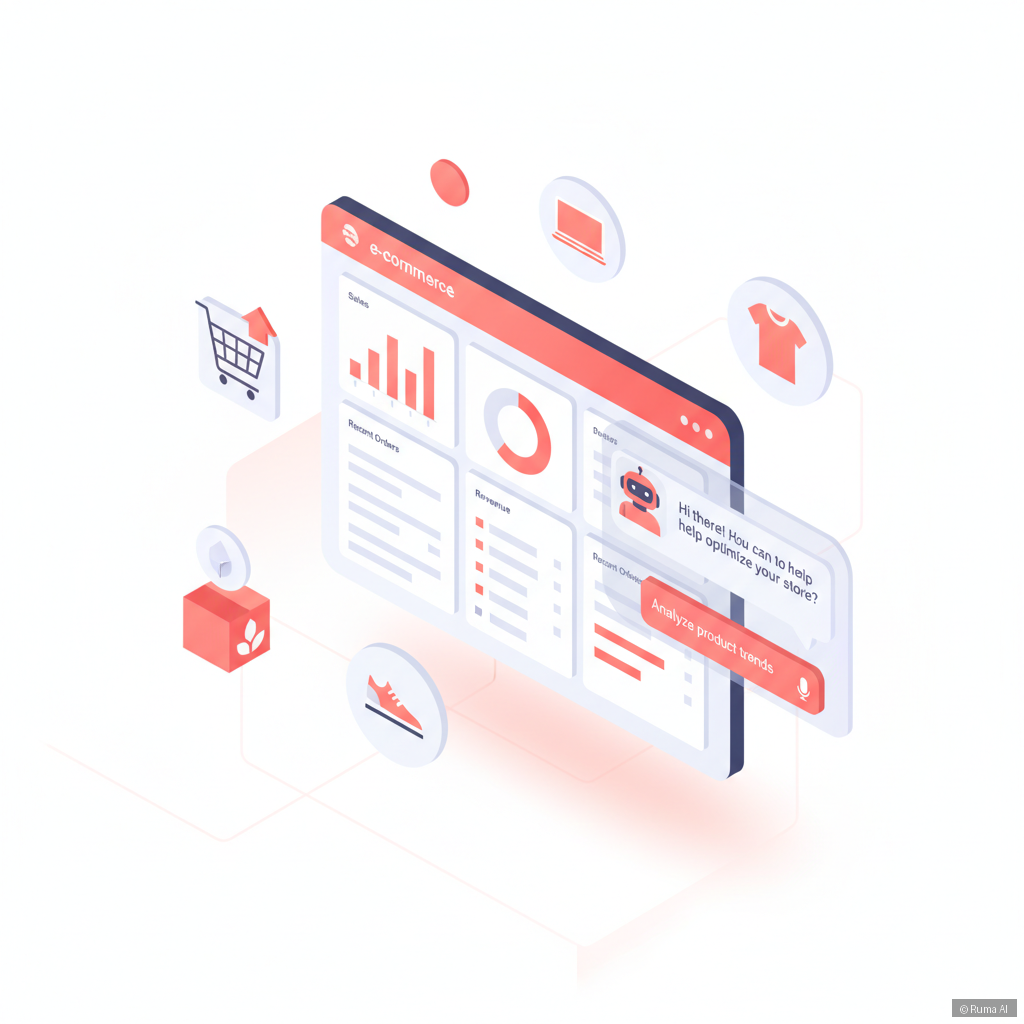
Picture this: It's 11 PM on a Tuesday. A customer lands on your Shopify store, finds a jacket they love, but can't figure out if it ships to Brisbane in time for the weekend. They type into your chat widget. Nobody answers. They leave.
Now picture the same scenario — but an AI agent answers instantly, checks the order shipping timeline, applies a 10% welcome coupon, and adds the jacket to their cart. Sale closed. You're asleep.
That second version isn't a fantasy anymore. It's what small and medium Shopify store owners are building right now with the right AI tools. And in 2026, the gap between stores that use Shopify AI automation and those that don't is widening fast.
Why 2026 Is the Year SMBs Finally Embrace AI Tools
For years, AI felt like enterprise territory — something big brands with six-figure tech budgets could afford. But the landscape shifted dramatically. The tools that once required a developer team and months of integration now take minutes to set up.
A recent wave of industry roundups highlighting the best AI tools for business productivity in 2025 made one thing crystal clear: AI is no longer optional for competitive e-commerce. The businesses winning right now aren't necessarily the biggest — they're the ones moving fastest.
For Shopify store owners specifically, the opportunity is enormous. Here's why:
- Shopify has 4+ million merchants globally — competition is fierce
- Average cart abandonment sits around 70% — AI can claw a chunk of that back
- Customer support is the #1 operational bottleneck for growing stores
- Personalization at scale is impossible without automation
The stores scaling profitably in 2026 have figured out how to automate the repetitive stuff — so their human team can focus on the creative, strategic work that actually moves the needle.
What "Agentic AI" Actually Means for Your Shopify Store
You've probably heard "AI chatbot" thrown around a lot. But there's a meaningful difference between a basic FAQ bot and a true agentic AI system.
A traditional chatbot follows a script. It answers the questions it was trained to answer, and when it hits a wall, it shrugs.
An agentic AI is different. It decides which tools to use based on what the customer actually needs — in real time. Think of it like the difference between a vending machine and a knowledgeable store assistant.
For example, when a customer asks "Where's my order and can I get a discount on my next one?", an agentic AI doesn't just look up the order — it tracks the shipment, generates a coupon code, and applies it to their cart in the same conversation. No human needed.
This is exactly what the Shopify AI Agent from Ruma AI does. It syncs with your Shopify product catalog, handles order tracking, enables checkout upsells, and even books meetings — all from one intelligent agent.
The 5 AI Capabilities Every Shopify Store Needs in 2026
1. Real-Time Product Search and Recommendations
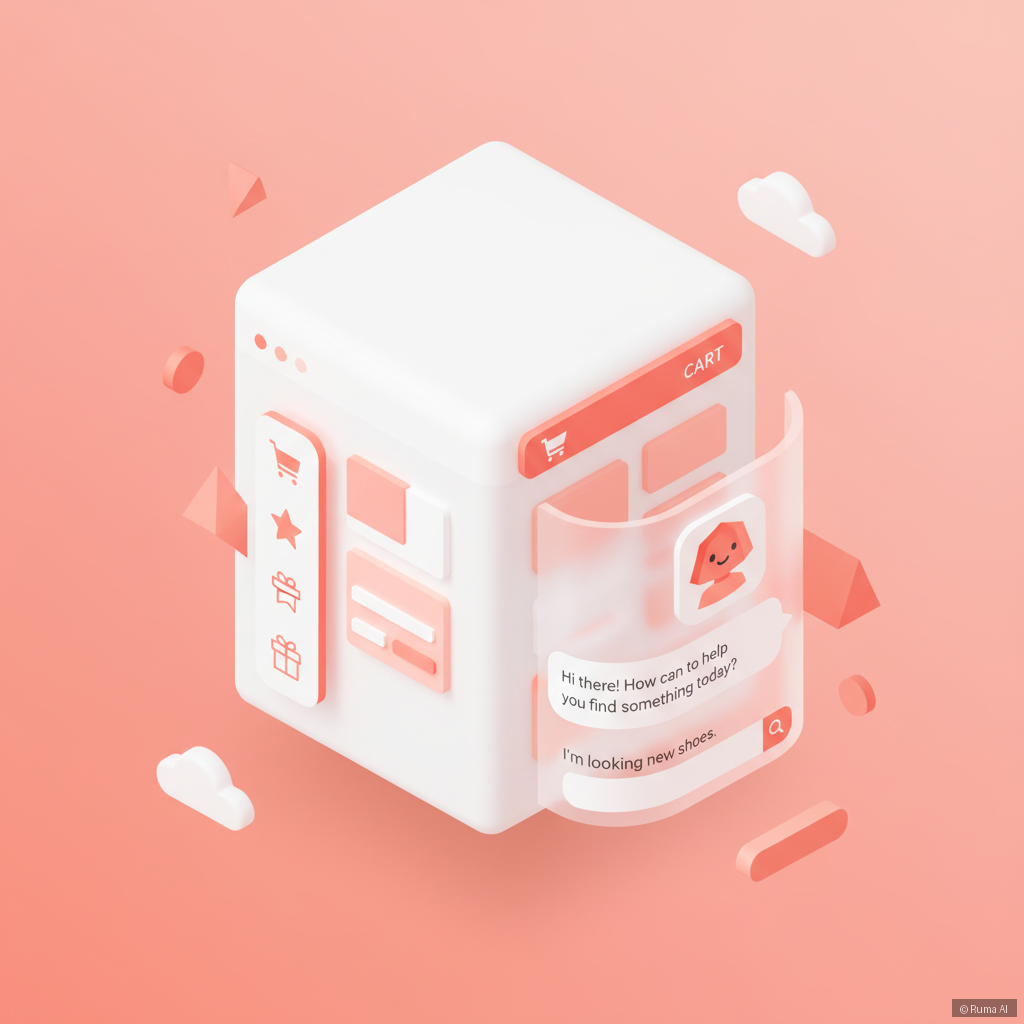
Customers don't always know what they're looking for. They describe it. A good AI agent can search your entire product catalog based on natural language — "something waterproof under $80 for hiking" — and surface the right products instantly.
This is conversion-rate gold. When customers find what they want faster, they buy.
2. Order Tracking Without the Back-and-Forth
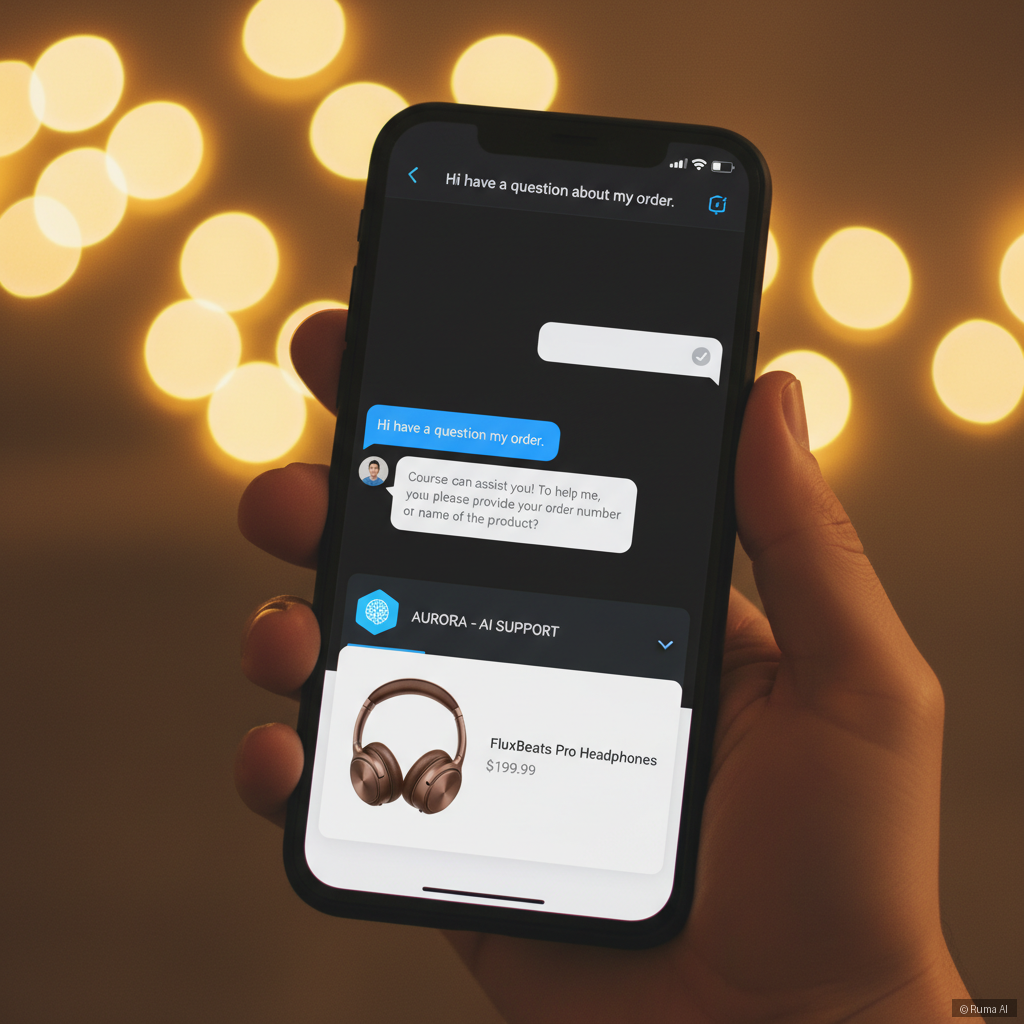
"Where's my order?" is the single most common customer support query for e-commerce stores. It's also completely automatable. Your AI agent should be able to pull live order status, estimated delivery dates, and carrier info — without a human touching it.
3. Coupon Application and Cart Management
This one's underrated. An AI that can apply discount codes and add products to a customer's cart mid-conversation is essentially a sales assistant working 24/7. It removes friction at the exact moment customers are ready to buy.
4. Seamless Human Handoff
Not every conversation should stay with the AI. Complex complaints, refund disputes, or high-value customers sometimes need a real person. The best systems — including Ruma AI — use live agent handoff via WebSocket, so the transition is instant and the human agent gets full conversation context.
5. CRM Sync for Lead Capture
Every conversation is a data point. An AI agent that automatically pushes customer info and transcripts to HubSpot, Salesforce, or Zoho means your sales and marketing team always has fresh, accurate data — without manual entry.
Beyond Shopify: Multi-Channel AI Support
Here's something a lot of Shopify store owners miss: your customers aren't only on your website.
They're on WhatsApp asking about sizing. They're on Telegram looking for order updates. They're calling your business number at 7 AM. Meeting them where they are isn't just good service — it's a competitive advantage.
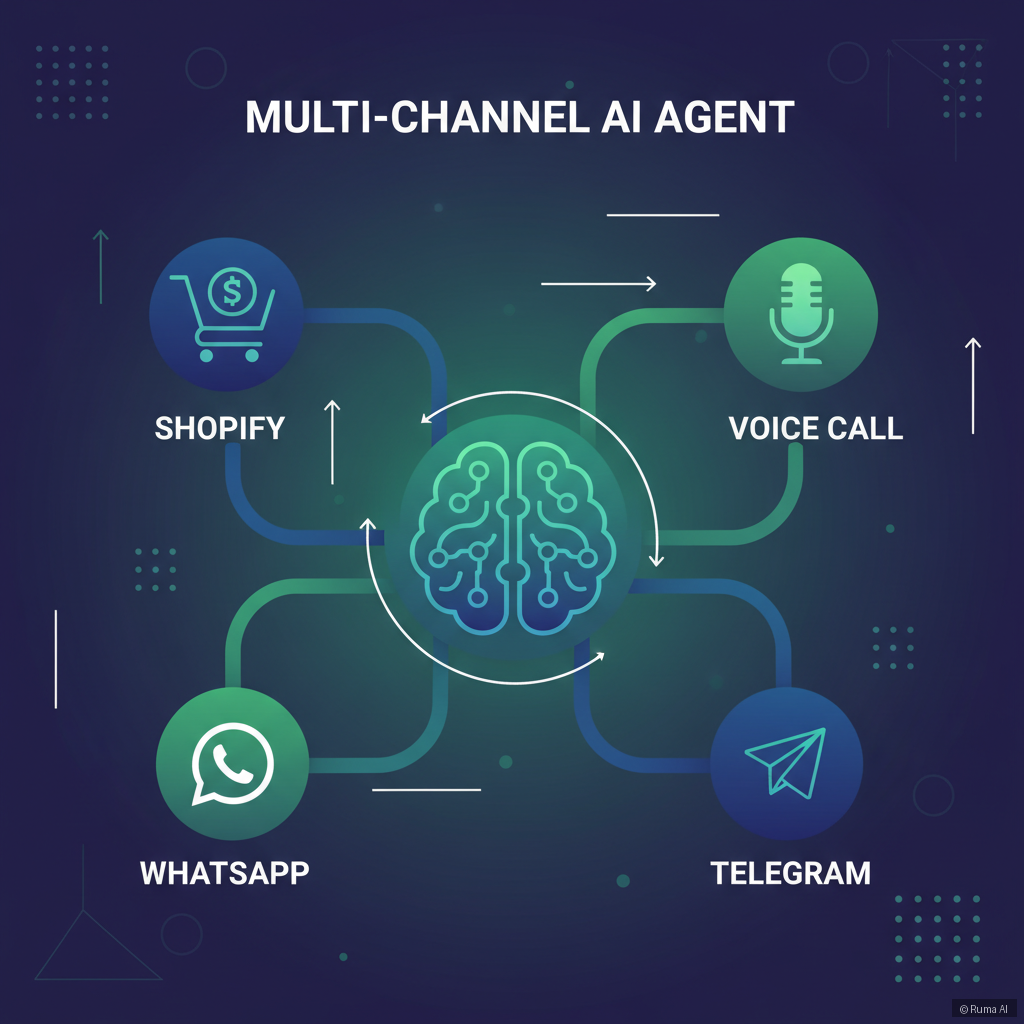
Ruma AI's Standalone AI Agent lets you deploy the same intelligent agent across Telegram, WhatsApp Business, and even voice channels — no website required. The AI that handles your Shopify chat can also answer your business phone with full product and order context. That's genuinely powerful.
And if you run a hybrid operation — say, a Shopify store and a WordPress blog or landing page — the Embed Script for any website drops in with a single line of code and works across React, Next.js, Vue, or any custom site.
How to Actually Set Up AI on Your Shopify Store (Practical Steps)
Let's get concrete. Here's how a typical Shopify merchant gets started:
Most merchants are live within an afternoon. The setup isn't the hard part — deciding which workflows to automate first is. Start with order tracking and product search. Those two alone handle the majority of inbound queries for most stores.
What About Voice? (More Relevant Than You Think)
Voice AI is the sleeper hit of 2026. Customers — especially in the 35+ demographic — still prefer calling over chatting. But staffing a phone line is expensive and inconsistent.
Ruma AI includes AI voice calling, where customers call your number and the AI answers with full product and order context. It can book appointments, answer product questions, and escalate to a human when needed. For Shopify stores selling higher-ticket items, this is a genuine conversion lever.
The ROI Conversation (Because It Matters)
Let's talk numbers, because that's what actually gets buy-in.
If your store handles 500 support conversations a month and AI resolves 70% of them without human involvement, you've saved hundreds of hours annually. Even at a modest $15/hour for support staff, that's significant savings — often 10–20x the cost of the AI tool itself.
Ruma AI's paid plans start at just $9/month (Go plan), with the Pro plan at $79/month covering the kind of volume most growing Shopify stores need. For stores on 6-month plans, there's an additional 15% saving. View pricing to find what fits your current stage.
The ROI math is pretty straightforward once you run it for your own numbers.
Frequently Asked Questions
What makes an AI agent different from a regular Shopify chatbot?
A standard chatbot follows pre-set rules and scripts. An agentic AI like Ruma AI autonomously decides which tools to use based on the customer's actual request — it can search products, track orders, apply coupons, and book meetings all in one conversation, without being explicitly told to do each step.
Can Ruma AI's Shopify agent handle multiple languages?
Yes — Ruma AI supports 50+ languages, which makes it especially useful for Shopify stores serving international customers. The AI detects language automatically and responds accordingly.
Do I need technical skills to set up the Shopify AI agent?
Not at all. The Shopify AI Agent is designed for non-technical store owners. Product sync happens automatically, and the setup wizard walks you through configuration without touching a line of code.
The Shopify stores that will dominate in 2026 aren't necessarily the ones with the biggest ad budgets. They're the ones that automate intelligently — turning every customer touchpoint into a seamless, responsive experience.
If you're ready to stop losing sales to slow response times and start converting conversations into revenue, Ruma AI is worth exploring. Start free and see how an agentic AI agent changes the game for your store.