
The Lead That Got Away (And Why It Keeps Happening)
You know the scenario. A customer lands on your Shopify store at 11:47 PM, adds three items to their cart, then asks a question in the chat widget. Nobody answers. By morning, they've bought from someone else — and their name never made it into your CRM.
This isn't a staffing problem. It's an architecture problem. And in 2026, agentic AI is finally fixing it at the root.

What "Agentic" Actually Means for E-Commerce
Most chatbots are reactive — they wait for a question, look up a scripted answer, and send it back. Agentic AI is different. It decides what to do next. It reads the context, picks from a toolkit of actions, and executes — without waiting for a human to press a button.
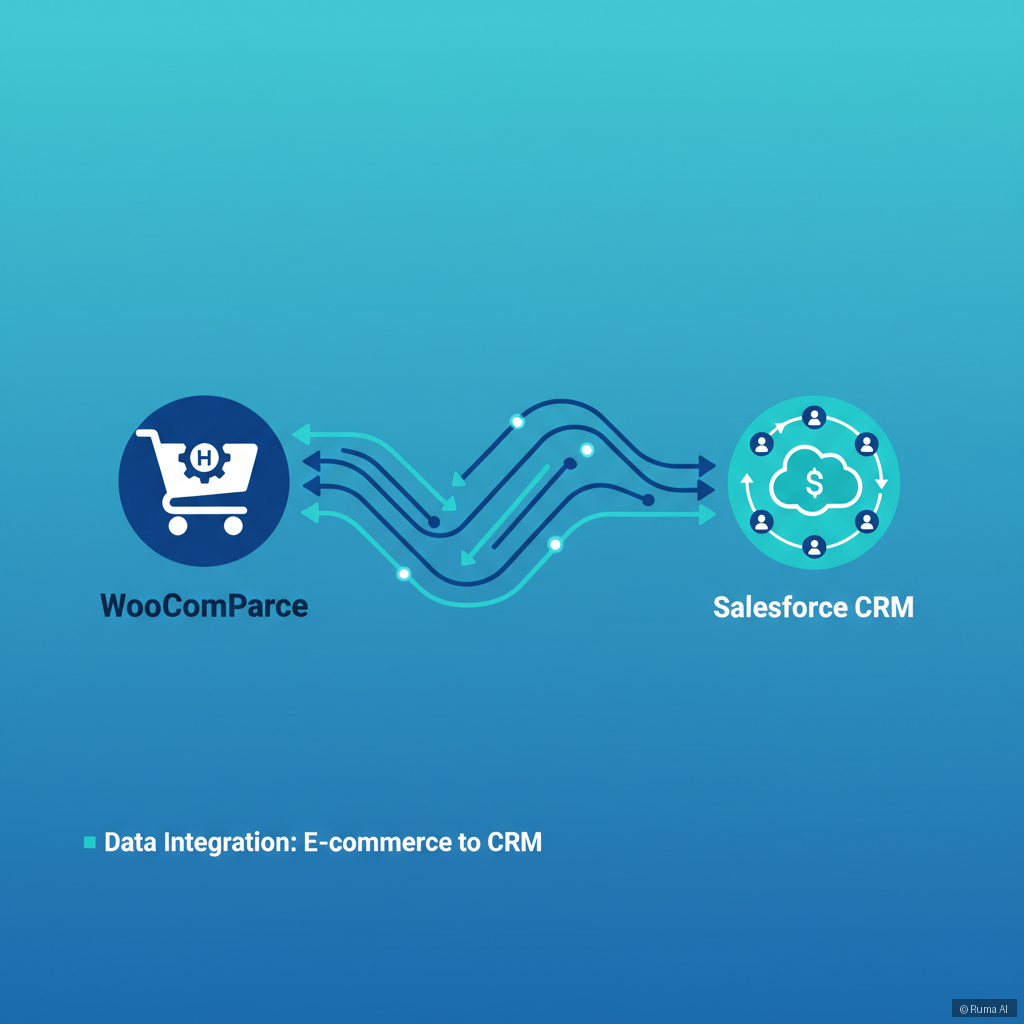
For a small business owner running a WooCommerce store, that means the AI isn't just chatting. It's searching your product catalog, applying a coupon code, tracking an order, booking a follow-up call — and simultaneously pushing that customer's data into your HubSpot or Salesforce pipeline. All in one conversation.
That's the shift that makes this genuinely exciting.
4 Ways Agentic AI Closes the CRM Gap in E-Commerce
Here's where the rubber meets the road for small and mid-sized businesses:
None of this requires your team to be online. That's the whole point.
Real Talk: How This Works in Practice
Imagine a boutique home goods brand running on WordPress with WooCommerce. Their biggest pain point wasn't customer service volume — it was data leakage. Conversations happened, questions got answered, but none of it fed back into their sales process.
After installing the WordPress AI Plugin and connecting it to HubSpot, every chat interaction started building their pipeline automatically. The agentic AI would identify whether someone was browsing, comparing, or ready to buy — and route them accordingly. High-intent visitors got a calendar booking link dropped into the chat. Casual browsers got a product recommendation. Everyone got logged.
For Shopify merchants, the Shopify AI Agent does the same — syncing product data, tracking orders, and pushing lead intel to your CRM without any manual export.
And if you're running a custom React or Next.js storefront? One line of code from the Embed Script for any website brings the same agentic layer to any stack.
The "Always-On" Sales Rep You Never Had to Hire
Here's an analogy that lands with most business owners: imagine hiring a sales rep who never sleeps, speaks 50+ languages, remembers every customer interaction, and files their own CRM notes. That's what a properly configured agentic AI customer support setup looks like in 2026.
The businesses pulling ahead right now aren't the ones with the biggest support teams. They're the ones whose systems are doing the relationship-building work in the background.
For stores that sell across channels — think WhatsApp, Telegram, or even inbound voice calls — the Standalone AI Agent lets you deploy the same intelligent pipeline to those touchpoints without needing a website at all.

Start Small, Scale What Works
You don't need to overhaul your entire stack to benefit from this. Start with one channel — your website chat or your Shopify store — and connect it to the CRM you already use. Watch what data starts flowing in. Then expand.
Ruma AI's free plan gives you 100 messages/month to test the full agentic experience. Paid plans start at just $9/month, and the Pro tier at $79 is where most growing e-commerce brands find their sweet spot.
The leads are already coming. The question is whether your systems are catching them.
Start free with Ruma AI and see how agentic AI can turn your support chat into a CRM-filling, pipeline-building growth engine.Frequently Asked Questions
What is agentic AI and how is it different from a regular chatbot?
A regular chatbot follows a script — it matches keywords to pre-written answers. Agentic AI autonomously decides which action to take based on context. It can search products, apply coupons, book meetings, capture leads, and sync data to your CRM — all within a single conversation, without human intervention.
How does Ruma AI sync leads to HubSpot or Salesforce?
Ruma AI's agentic platform includes native CRM integrations with HubSpot, Salesforce, and Zoho. When a visitor shares their contact details or shows purchase intent, the AI automatically saves the lead and pushes the full conversation transcript to your CRM as an activity log — no manual export needed.
Can I use Ruma AI on a Shopify store and a WordPress site at the same time?
Yes. Ruma AI supports multiple deployment types under one account. You can run the Shopify AI Agent on your Shopify storefront and the WordPress AI Plugin on a separate WooCommerce site, with all conversations and lead data centralised in one dashboard.